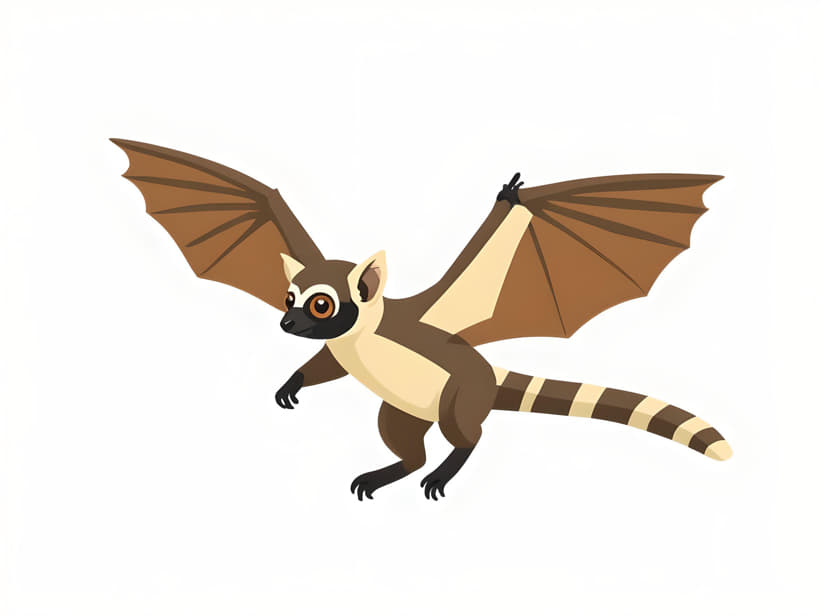
Flying lemurs, scientifically known as colugos or Dermoptera, are fascinating creatures known for their unique adaptations and ecological niche. Often referred to as “specialists,” flying lemurs exhibit several specialized features and behaviors that distinguish them within the animal kingdom. This article explores the specialism of flying lemurs, highlighting their adaptations, ecological roles, and unique characteristics.
Understanding Flying Lemurs
Definition and Taxonomy
Flying lemurs belong to the order Dermoptera, derived from the Greek words “derma” (skin) and “pteron” (wing), reflecting their unique wing-like membrane called the patagium. Despite their name, flying lemurs are not true lemurs and are more closely related to primates like monkeys and apes.
Habitat and Distribution
Flying lemurs are native to Southeast Asia, inhabiting tropical rainforests and dense forests of countries such as Malaysia, Indonesia, Thailand, and the Philippines. They are arboreal creatures, spending most of their lives in trees and rarely descending to the ground.
The Specialism of Flying Lemurs
1. Gliding Adaptations
One of the most distinctive features of flying lemurs is their ability to glide through the forest canopy. Their patagium, a stretch of skin that extends from their neck to the tips of their fingers and toes, allows them to glide effortlessly from tree to tree. This adaptation is a specialized form of locomotion that aids in foraging, escaping predators, and navigating their arboreal environment.
2. Dietary Specialization
Flying lemurs are herbivorous and specialize in feeding on leaves, shoots, fruits, and flowers found within their forest habitats. Their diet consists mainly of plant material, which they obtain by foraging throughout the night. This dietary specialization aligns with their arboreal lifestyle and the availability of vegetation in their environment.
3. Nocturnal Behavior
As nocturnal animals, flying lemurs are most active during the night. This behavioral specialization allows them to avoid competition with diurnal (daytime-active) species and reduces their exposure to predators. Their keen senses and agile gliding abilities make them efficient hunters of nocturnal prey such as insects and small vertebrates.
4. Social Structure and Reproduction
Flying lemurs are generally solitary animals, although they may form small groups or pairs during mating season and while raising young. They exhibit specialized behaviors related to reproduction, including mating rituals and maternal care. Females typically give birth to a single offspring, known as a pup, which they nurture in tree hollows or other sheltered locations.
5. Ecological Role
In their forest ecosystems, flying lemurs play a vital role as seed dispersers and pollinators. By feeding on fruits and flowers and traveling between trees, they help maintain plant diversity and contribute to forest regeneration. Their specialized adaptations for gliding also contribute to the structure and dynamics of the forest canopy, where they occupy a unique niche as arboreal specialists.
Conservation Status and Threats
Despite their specialized adaptations, flying lemurs face conservation challenges due to habitat loss, deforestation, and hunting for their meat and fur. Several species of flying lemurs are classified as vulnerable or endangered, highlighting the importance of conservation efforts to protect their habitats and mitigate human-induced threats.
Flying lemurs exemplify specialization in adaptation, behavior, and ecological function within their forest habitats. Their ability to glide, specialized diet, nocturnal lifestyle, and role as seed dispersers underscore their importance as arboreal specialists. Understanding the specialism of flying lemurs not only enhances our appreciation for their unique evolutionary adaptations but also emphasizes the need for conservation efforts to safeguard their future survival. By protecting their forest habitats and raising awareness about their ecological role, we can ensure that these remarkable creatures continue to thrive in their natural environments for generations to come.