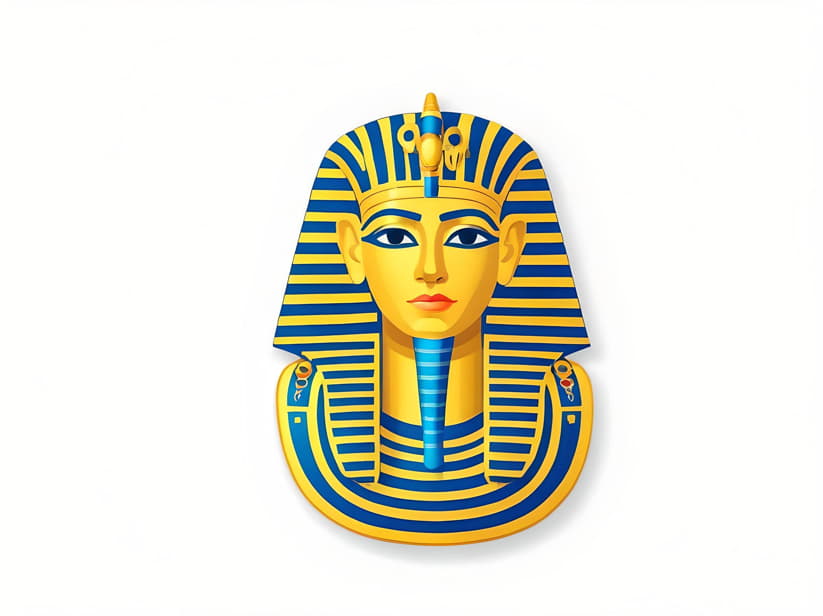
The discovery of Tutankhamun’s tomb stands as one of the most significant archaeological finds of the 20th century. This monumental achievement, which unveiled the splendor of ancient Egyptian civilization, was made by the British archaeologist Howard Carter. His journey to uncovering the tomb of the boy king, often referred to as King Tut, is a story of perseverance, passion, and remarkable historical significance.
Early Life and Career of Howard Carter
Howard Carter was born on May 9, 1874, in Kensington, London. From a young age, Carter exhibited a keen interest in art and archaeology. At the age of 17, he traveled to Egypt to work as a tracer for the Egypt Exploration Fund. His early work involved copying the intricate inscriptions and art found in Egyptian tombs and temples. This experience deepened his fascination with ancient Egypt and honed his skills in archaeology.
The Quest for Tutankhamun’s Tomb
Carter’s quest to find Tutankhamun’s tomb began in earnest when he teamed up with George Herbert, the 5th Earl of Carnarvon, in 1907. Lord Carnarvon provided the financial backing needed for the excavation work in the Valley of the Kings. Despite numerous challenges and setbacks, Carter’s determination never wavered.
For several years, Carter and his team meticulously searched the Valley of the Kings, guided by the belief that there were still undiscovered tombs. By 1922, after years of fruitless searching, Lord Carnarvon considered withdrawing his support. Carter, however, convinced him to fund one more season of excavation, a decision that would soon prove to be monumental.
The Discovery of the Tomb
On November 4, 1922, Carter’s team made a breakthrough. They discovered a set of steps leading down to a sealed doorway. Realizing the significance of this find, Carter immediately contacted Lord Carnarvon, who traveled to Egypt to witness the opening of the tomb.
On November 26, 1922, in the presence of Lord Carnarvon and others, Carter made a small hole in the doorway and peered inside. Holding a candle to illuminate the darkness, he saw a room filled with gold and treasures. When asked by Carnarvon if he could see anything, Carter famously replied, “Yes, wonderful things.”
The tomb they had discovered was that of Tutankhamun, a relatively obscure pharaoh who ruled during the 18th Dynasty of Egypt’s New Kingdom period. The tomb, designated KV62, was remarkably intact and contained a wealth of artifacts, including the iconic gold mask of Tutankhamun, jewelry, chariots, and statues. The discovery provided invaluable insights into the life and death of the young pharaoh and the grandeur of ancient Egyptian civilization.
The Significance of the Discovery
The discovery of Tutankhamun’s tomb had a profound impact on the field of archaeology and the world’s understanding of ancient Egypt. It was the first time a pharaonic tomb had been found with most of its contents undisturbed. The wealth of artifacts uncovered in the tomb offered a unique glimpse into the art, culture, and daily life of ancient Egypt.
Moreover, the discovery captivated the public’s imagination and sparked a worldwide fascination with ancient Egypt, often referred to as “Tutmania.” The treasures of Tutankhamun’s tomb toured the globe, drawing millions of visitors and inspiring countless books, films, and documentaries.
Howard Carter’s Legacy
Howard Carter’s meticulous excavation and documentation of Tutankhamun’s tomb set new standards in the field of archaeology. He took great care to record the location and condition of each artifact before moving it, ensuring that the historical context was preserved. His detailed notes and photographs remain invaluable resources for researchers and historians.
Carter continued to work in Egypt after the discovery, but he never made another find of comparable significance. He spent his later years writing about his experiences and the treasures of Tutankhamun’s tomb. Howard Carter passed away on March 2, 1939, but his legacy endures.
Howard Carter’s discovery of Tutankhamun’s tomb is a testament to his dedication, skill, and passion for archaeology. The treasures he uncovered have enriched our understanding of ancient Egypt and continue to captivate and inspire people around the world. Carter’s work not only brought to light the story of a young pharaoh but also underscored the importance of preserving and studying our shared human heritage. Through his remarkable achievement, Howard Carter has secured his place in history as one of the most renowned archaeologists of all time.